Flood-Damaged Multicoloured Slate Floor Restored in Horncastle
This multicoloured slate floor in Horncastle, had suffered considerable damage following a flood two years earlier. Unfortunately, delays with the insurance claim meant the homeowner had been unable to complete the restoration work until recently. By the time the plastering was finally finished, the slate floor was the last remaining part of the property to be renovated.
Although the delay had been frustrating for the customer, allowing the building sufficient time to dry out was beneficial before undertaking the restoration of the natural stone flooring.
I had previously visited the property to assess the condition of the slate and provided a quotation, which was subsequently accepted by the insurance company. All that remained was for the other tradespeople to finish their work and leave the property so that I could begin the floor renovation.
 |
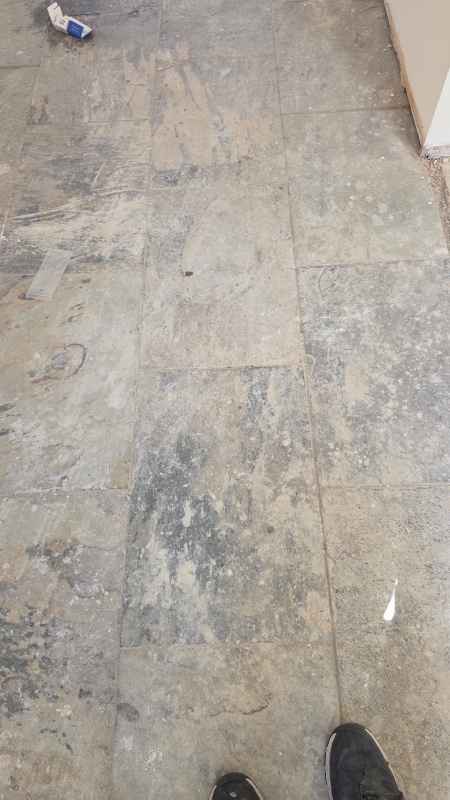 |
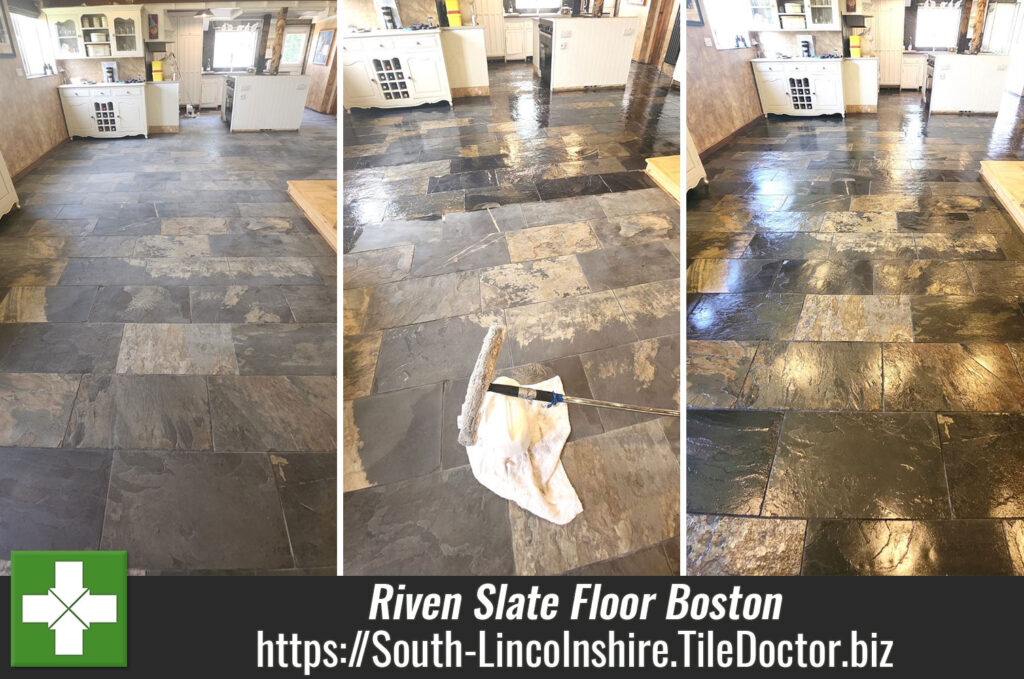
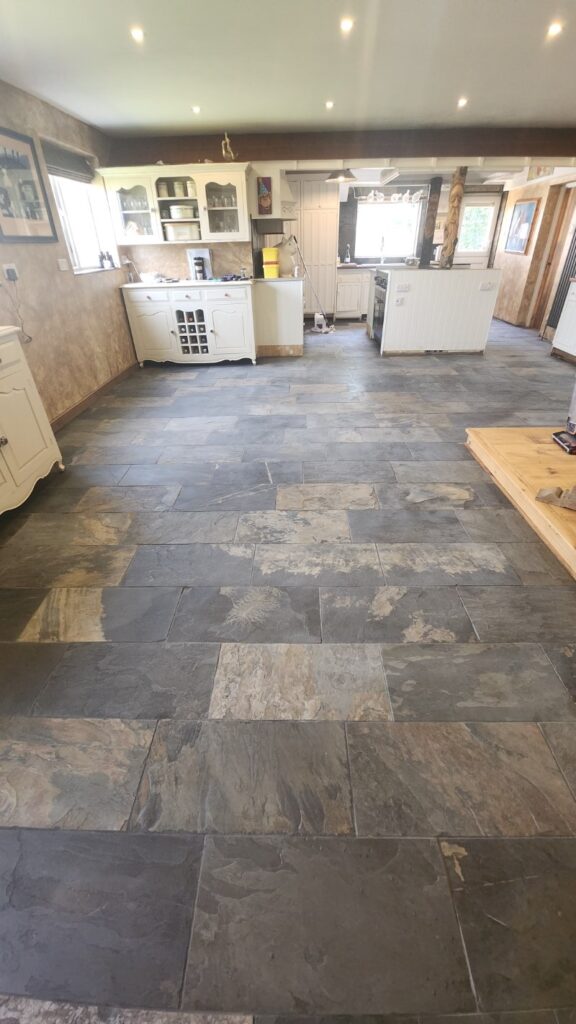
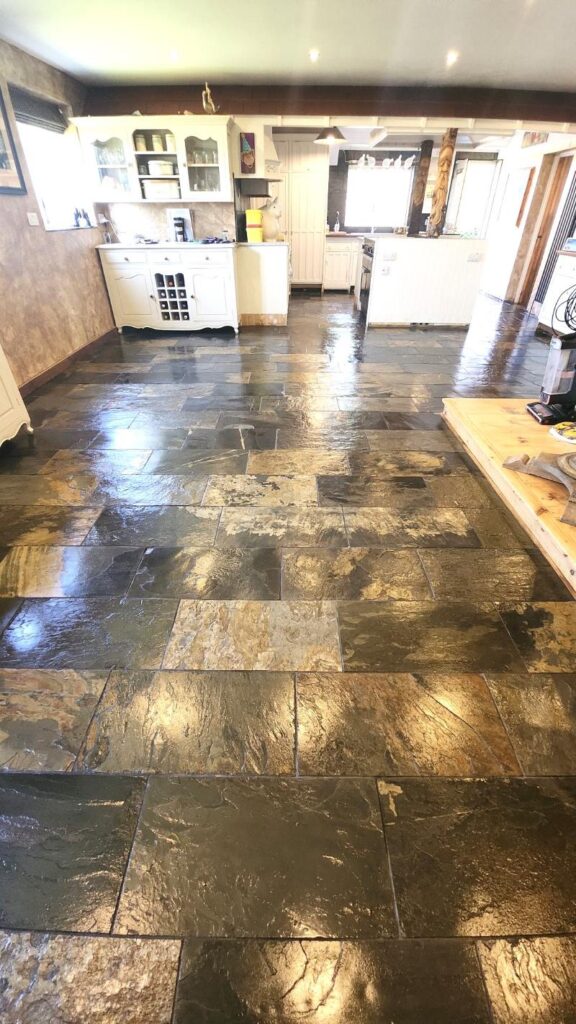
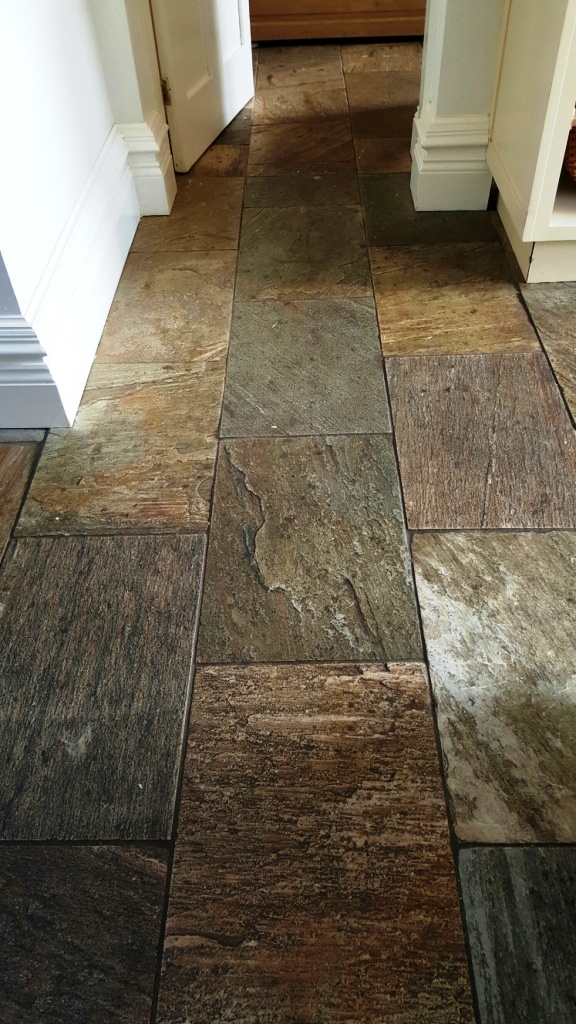
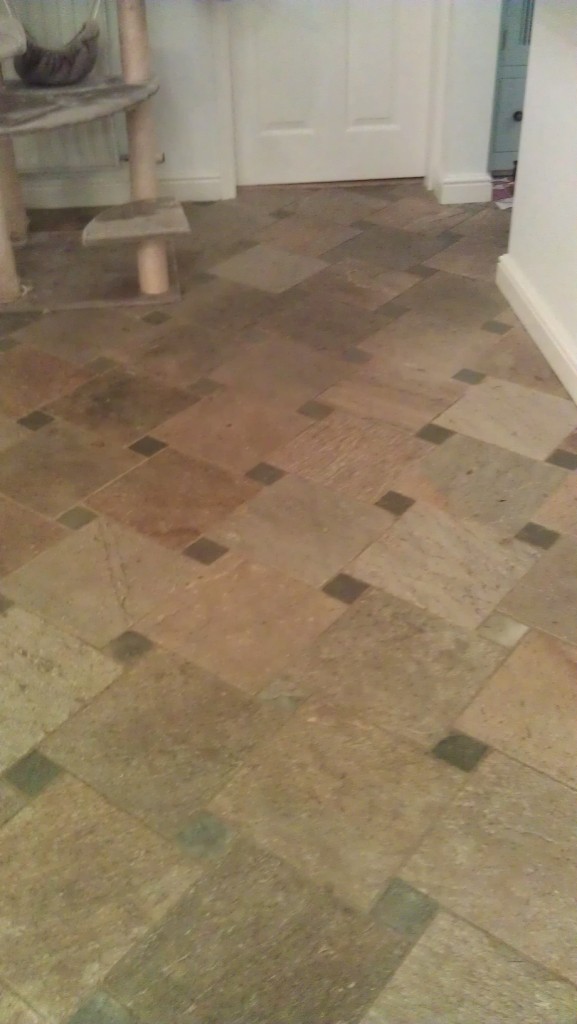
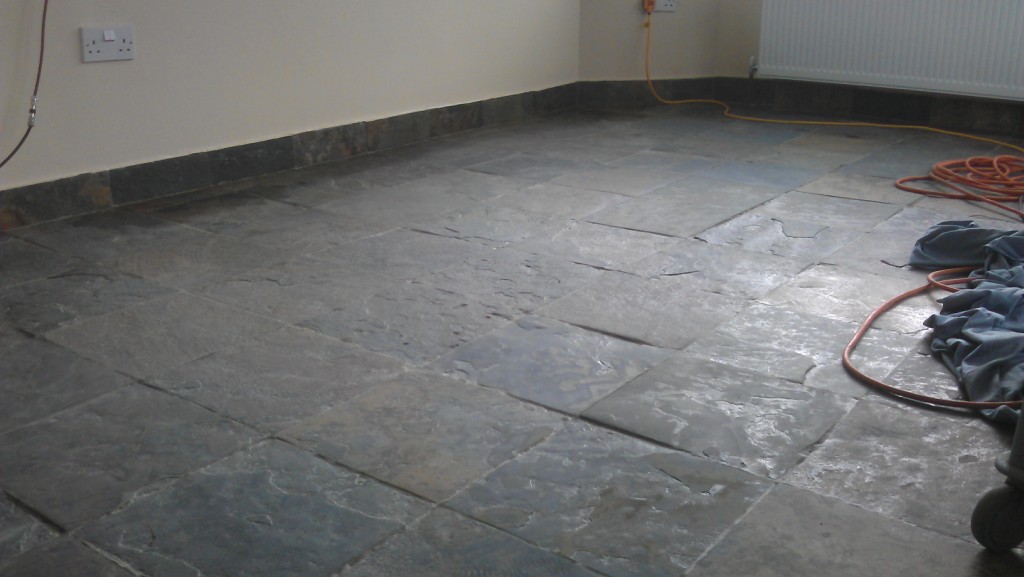
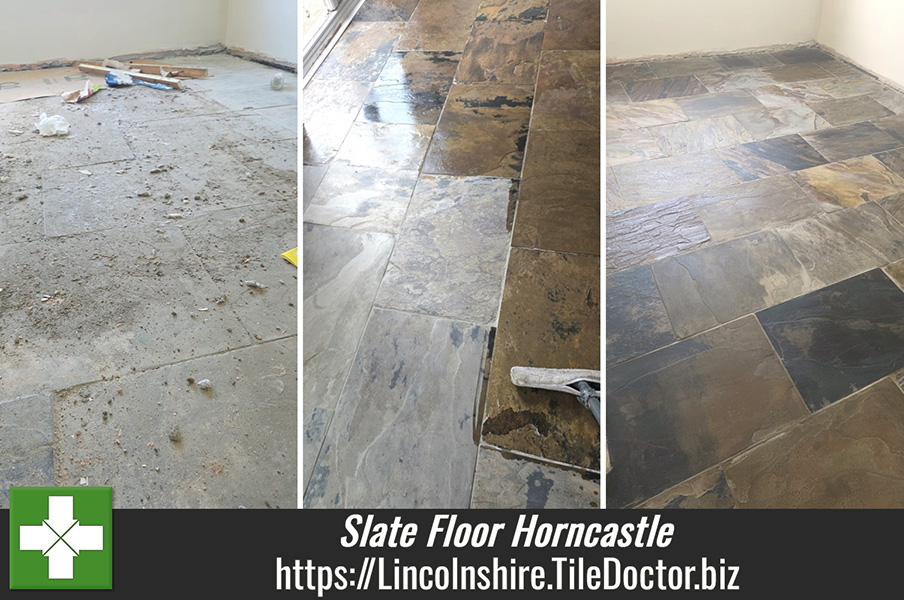
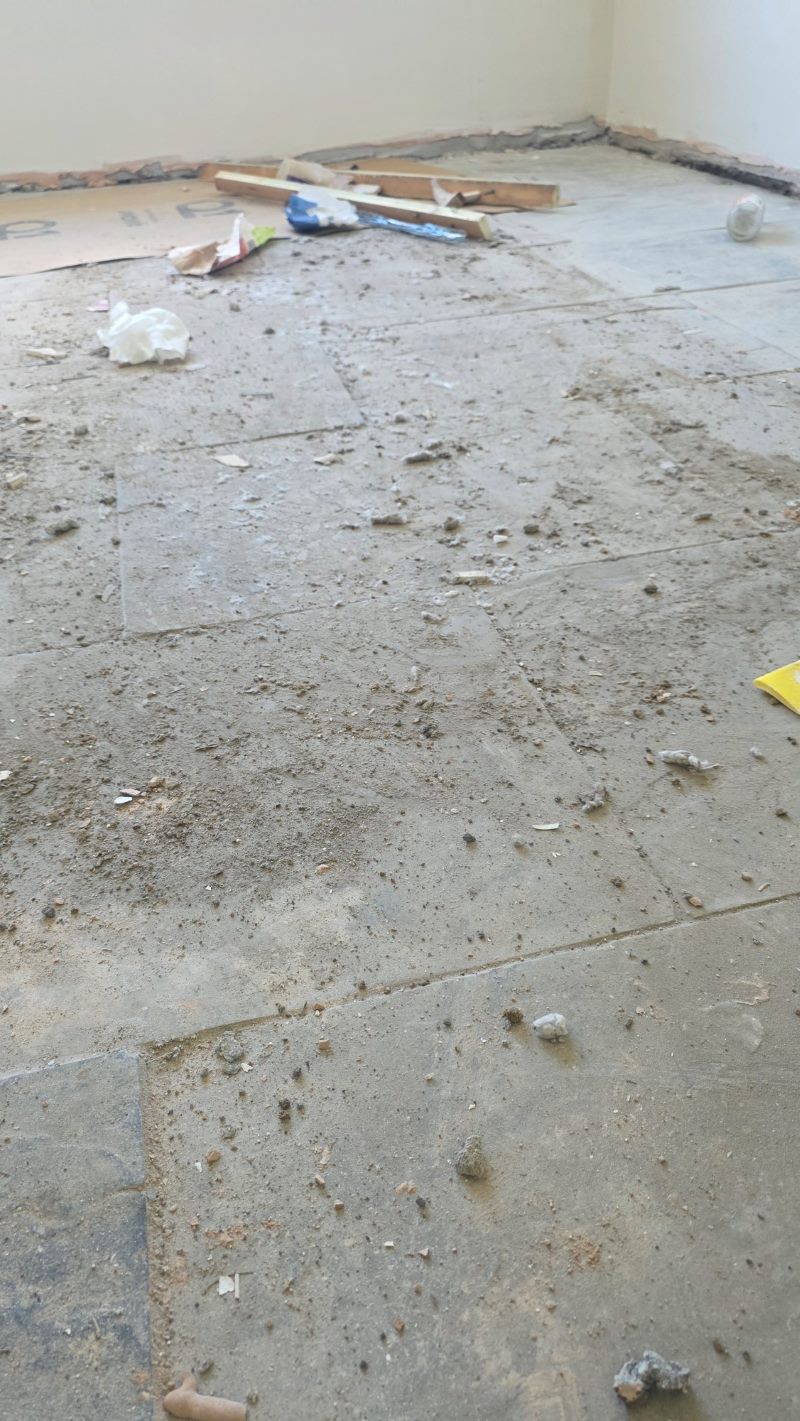
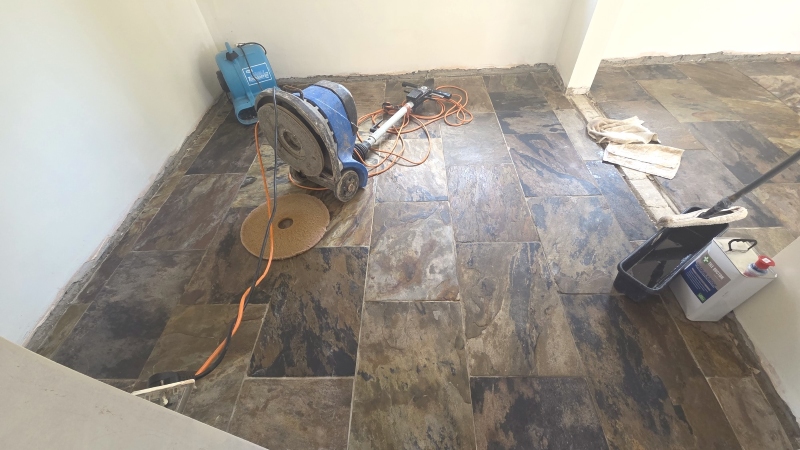
The slate was in a poor condition and almost unrecognisable. Flooding had left the stone stained and discoloured, and the situation had been made worse by tradespeople walking across the floor during the subsequent building work. Dirt, plaster dust and general building residue had become ingrained in the surface, obscuring the natural colours and character of the slate.
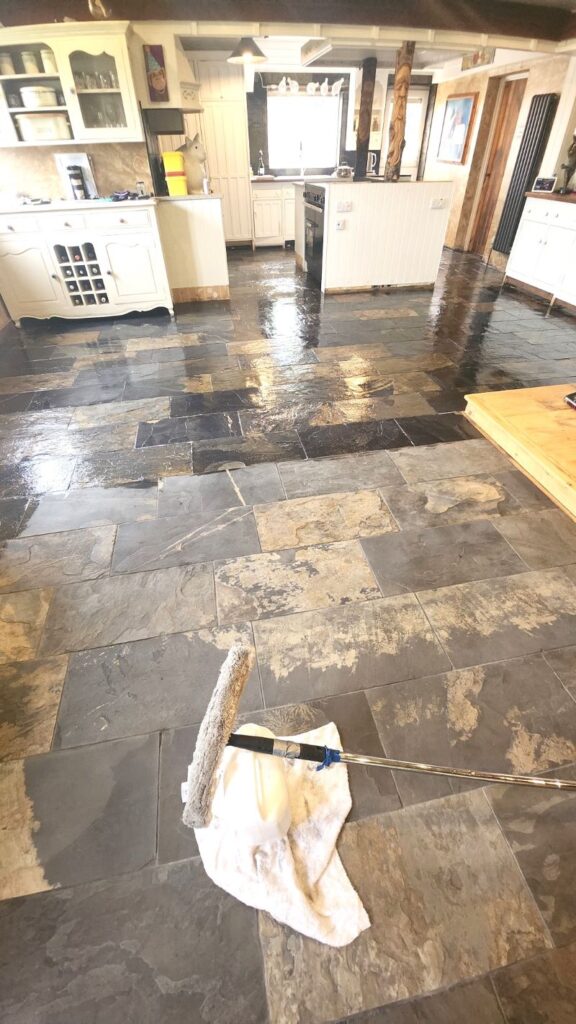
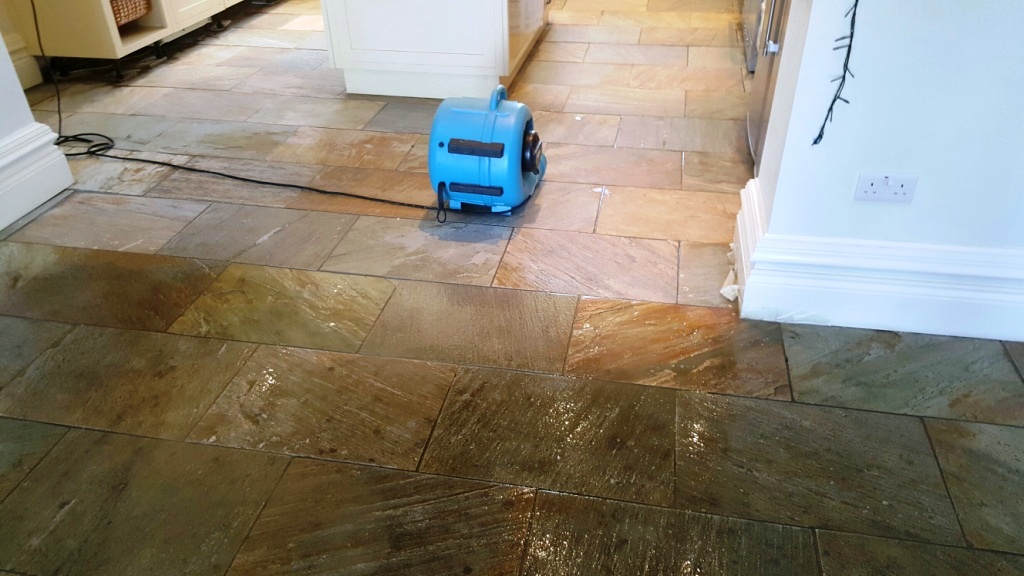
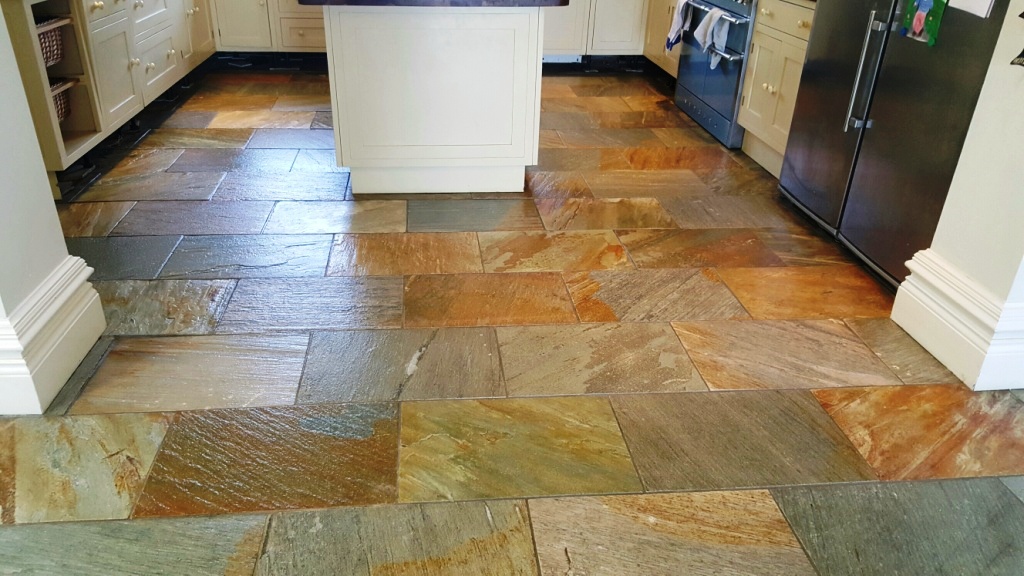
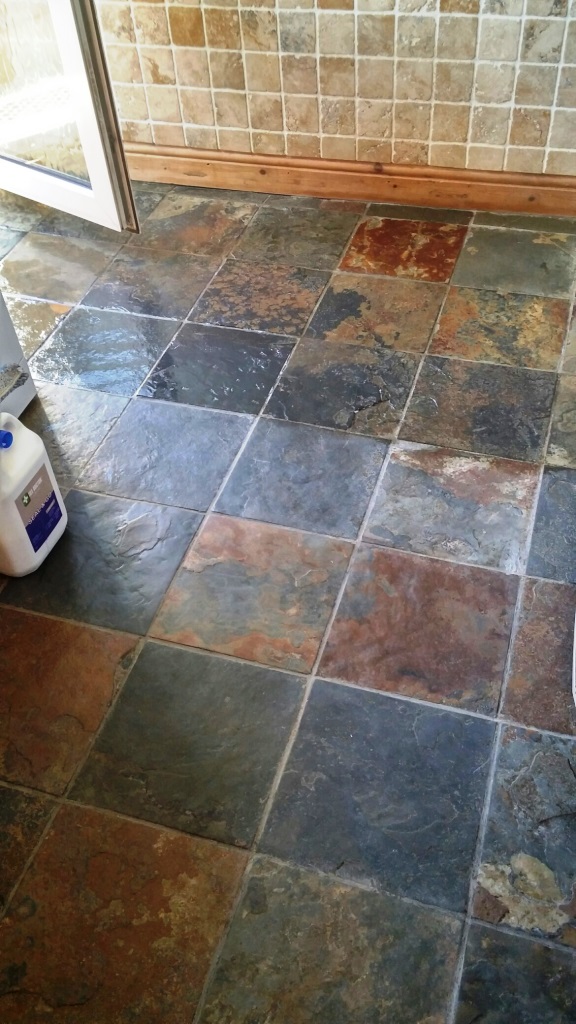
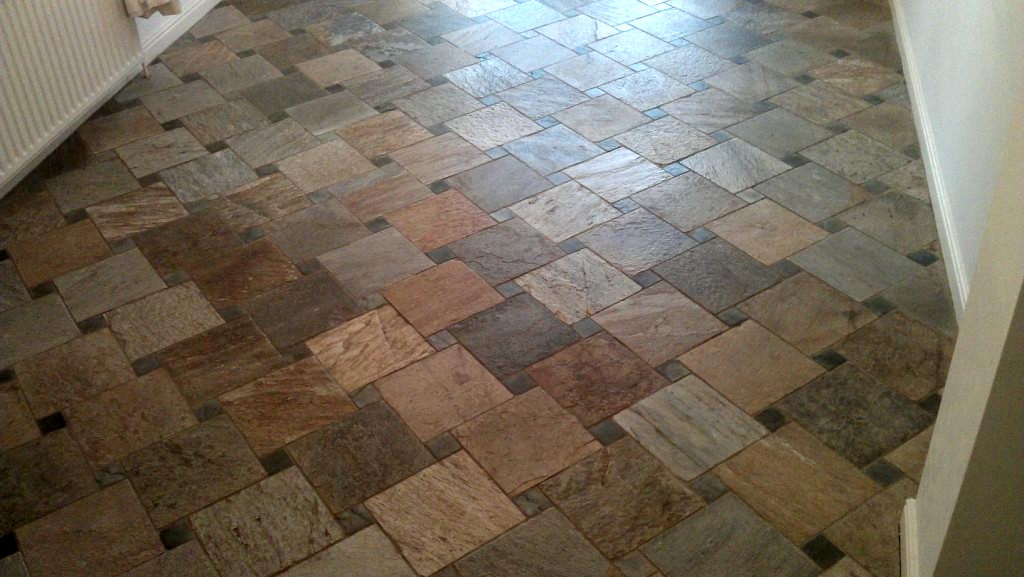
The photographs show the condition of the floor before cleaning and the transformation achieved following the restoration.
Deep Cleaning the Flood-Damaged Multi-Coloured Slate Tiles
Before starting the cleaning process, the floor was treated with an antibacterial treatment. This was an important first step following the previous flooding, before proceeding with the intensive cleaning required to remove the accumulated soiling.
I then carried out a thorough clean using a combination of Tile Doctor Pro-Clean and Tile Doctor Remove & Go. Pro-Clean is a professional tile and grout cleaner designed to tackle ingrained dirt and general soiling. Remove & Go is a coatings and residue remover that helps break down unwanted surface contamination, including stubborn deposits left behind during building work.
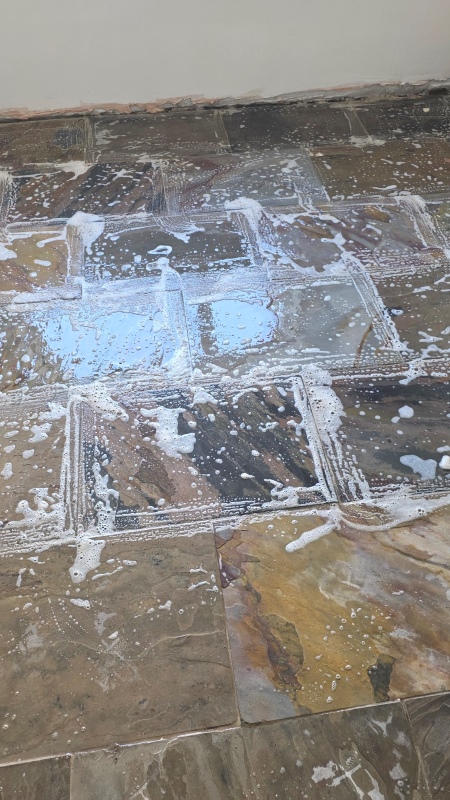
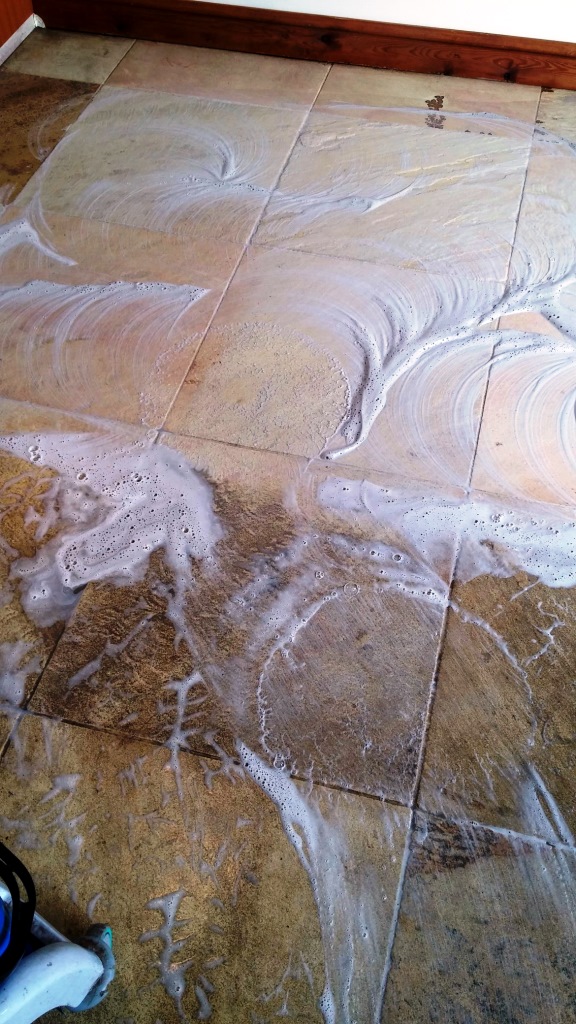
The two products were diluted with water and applied to the slate floor. I then worked the cleaning solution into the stone using a weighted rotary buffer fitted with a black scrubbing pad. This mechanical cleaning process helped release the embedded dirt, plaster dust and other contaminants from the surface of the tiles.
Once the entire floor had been treated, the dirty cleaning solution was extracted using a wet vacuum. I then inspected the slate carefully, identifying areas where the soiling remained particularly stubborn. These sections were treated again until I was satisfied with the results.
Cleaning the Grout and Preparing the Floor for Sealing
With the main cleaning completed, attention turned to the grout lines. Grout can hold considerable amounts of dirt, particularly on floors that have been exposed to flooding and building work.
To address this, I applied further Tile Doctor Pro-Clean directly to the grout and scrubbed the joints by hand using a scrubbing brush. This allowed me to concentrate on the grout lines and remove the remaining dirt without relying solely on the rotary cleaning machine.
The floor was then rinsed thoroughly to remove all traces of the cleaning solutions and loosened soil. A wet vacuum was used to extract the rinse water and remove as much moisture as possible from the slate and grout.
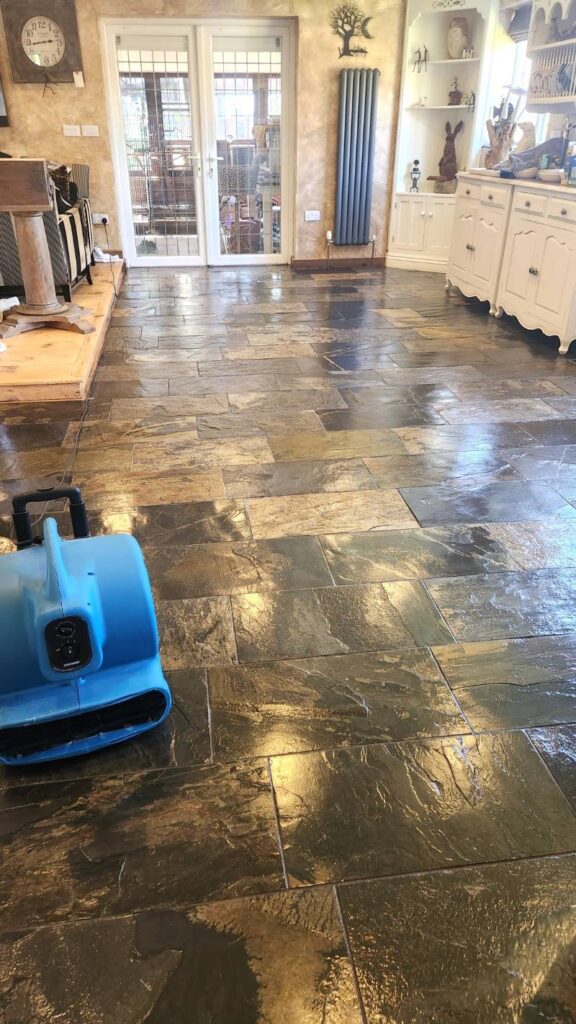
Allowing the floor to dry properly was particularly important given the property’s flood history. I left a couple of air movers in place to assist the drying process and returned two days later to continue the restoration.
Before applying the sealer, I checked the moisture levels using a damp meter to confirm that the floor was sufficiently dry. Sealing natural stone before it has dried adequately can lead to problems with the finish, so this check was an essential part of the process.
Sealing the Slate with Tile Doctor Colour Grow
Once the moisture readings confirmed that the slate was dry, I applied two coats of Tile Doctor Colour Grow.
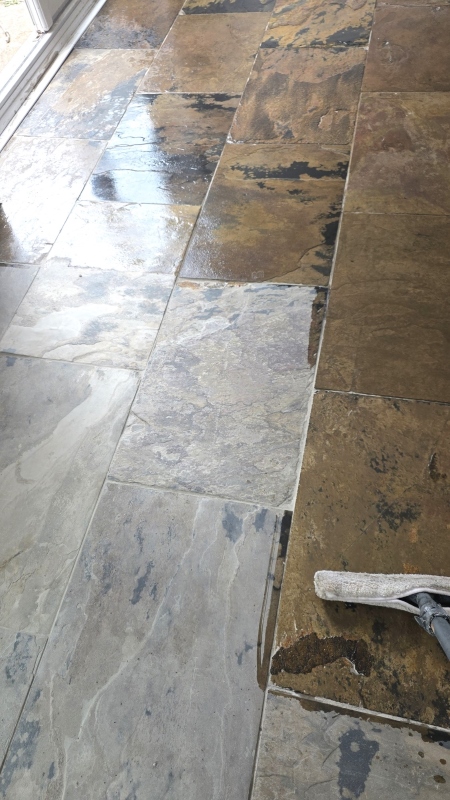
Colour Grow is an impregnating sealer that penetrates the stone to provide protection against everyday soiling while enhancing its natural colours. Its matt finish was particularly suitable for this multicoloured slate floor, as it restored the depth of colour without leaving an unwanted glossy appearance.
The improvement was immediately noticeable. The varied tones of the slate, including its natural browns, greys and darker shades, became much more pronounced, giving the floor a clean and attractive appearance once again.
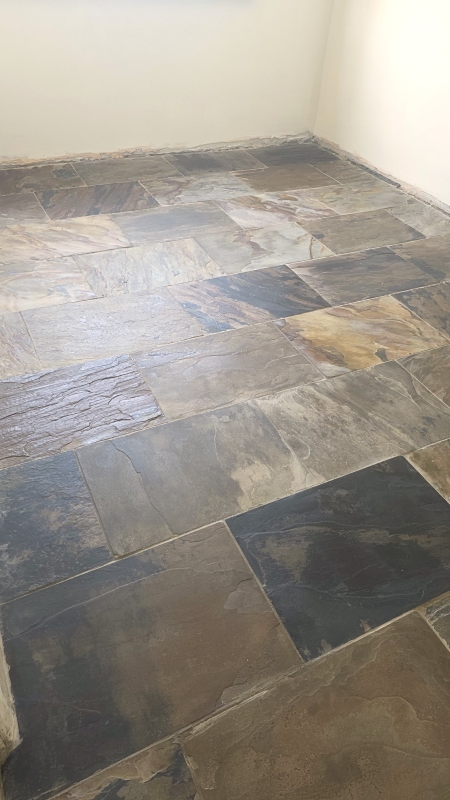
The sealer also provides an important layer of protection, helping make routine cleaning and maintenance easier for which I recommend using a Tile Doctor Neutral Cleaner. This is a mild yet effective tile and grout cleaning product that won’t impact the sealer.
A Beautiful Slate Floor Restored in Lincolnshire
The completed restoration transformed the slate floor which had been left stained by flooding and heavily soiled during subsequent building work. Through careful deep cleaning, detailed grout cleaning and the application of a suitable protective sealer, the slate’s natural appearance was brought back to life.
The customer was delighted to have her beautiful slate floor restored and was looking forward to getting the rest of her home back to the condition it had been in before the flood.
This project demonstrates the importance of using the correct cleaning products, allowing natural stone to dry thoroughly and selecting a suitable sealer when restoring flood-damaged slate flooring.
Professional Multi-Coloured Slate Tiled Floor Restoration in Lincolnshire
Flood-Damaged Multicoloured Slate Floor Restored in Horncastle Read More »